Proximity pages, the base of SEO for hotels here
Pages for hospital visitors, university visitors and business travelers, each with honest routes as well as times from your door.

Hospitality SEO
SEO for hotels, inns, extended-stay suites and furnished rentals in Palo Alto, CA, so that hospital visitors, university guests and business travelers find your rooms.
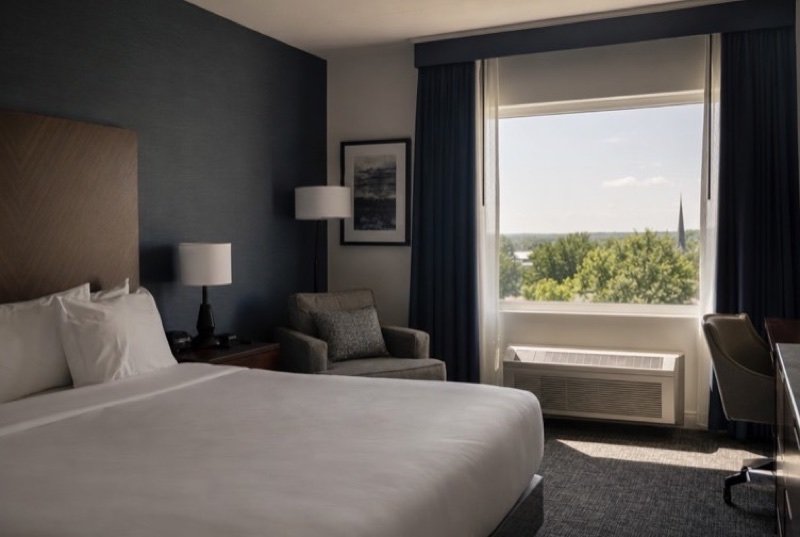
Palo Alto’s hotel searches are almost all about proximity: palo alto hotels near stanford hospital, palo alto hotels near stanford university, palo alto hotels downtown. The new Stanford Hospital at 500 Pasteur Drive opened in November 2019 with 368 single-patient rooms. Together with Lucile Packard Children’s Hospital Stanford on Welch Road, it brings a steady flow of families who need a bed nearby.
Those guests, however, want different things from a weekend visitor. For instance, a family supporting a patient may stay a week or longer, which is why palo alto hotels with kitchen turns up in the suggestions. University visitors, by comparison, want an easy walk to campus, while business travelers bound for Stanford Research Park care about a desk, quiet and an early checkout.
Then there is the train: the Palo Alto Caltrain station at 95 University Avenue averaged 3,603 weekday riders in fiscal 2025. A page explaining how to reach you from the platform therefore answers a question the big booking sites seldom touch.
Search demand
These exact Google suggestions (United States, October 2026) mostly name a destination or a must-have feature.
A planned getaway and a sudden hospital stay produce very different searches. Unlike the first, the second guest is tired, worried and holding a phone. For that guest, a calm page for hospital visitors, covering the route to Pasteur Drive and Welch Road, parking you can confirm, kitchen access, laundry and weekly rates, may be the most useful thing a Palo Alto property can publish.
Why direct bookings slip
Four gaps we find on independent hotel and guest-stay websites, especially smaller ones.
Close to which part? The hospital, the campus and the shopping center are different trips, so name each and give honest times.
Guests filtering for a kitchen, a pool or a desk need to see those words on the room page, rather than just in a photo.
Weekly rates, laundry and housekeeping matter to medical and relocation guests, so without a page those searches go to rental platforms.
If room details load only through a third-party engine, search engines find little text. Plain room pages, in contrast, fix that.
The work
Pages for hospital visitors, university visitors and business travelers, each with honest routes as well as times from your door.
Kitchens, pools, desks, accessibility and bed types written out in words a search engine can match, rather than icons.
Amenities, check-in times, photos of actual rooms and accurate attributes, all checked and then refreshed monthly.
For hospital families and relocations, with the details they ask about before committing.
Dated pages for busy weekends such as the Palo Alto Festival of the Arts, published well in advance.
Google Ads on your name and key searches, so guests land on your own site. Ad spend, though, goes straight to Google.
Done carefully
Each field has its own regulators and pitfalls. Here is how we handle this one.
A guest arriving for a hospital stay deserves facts, not urgency. We never write copy that pushes a worried person to book.
The FTC’s rules on endorsements and reviews apply to guest reviews and also to any perk offered for one. We will not imply a formal relationship with Stanford University, Stanford Health Care or any hospital unless you hold one in writing.
Ask us about your business
How we work
Every Palo Alto client goes through the same four steps, whatever they sell.
We review your site, your Business Profile and the competitors ahead of you, sampling rankings from several points around Palo Alto.
We choose the searches worth winning, assign each one a single page and explain the reasoning.
Listing, site and content work, beginning with the fixes most likely to move leads soonest.
Every month: leads, positions, what changed and why, and what we tackle next.
Questions
On broad ones, sometimes. On specific needs, however, such as a kitchen close to the children’s hospital, a small property with clear pages can do better than a chain.
A page for visitors, yes, built around practical needs: routes, parking, food nearby and longer stays. Leave out anything that suggests the hospital endorses you, though.
Platforms bring volume, but every booking carries a commission. A site that ranks for your name and for specific needs lets some guests book with you directly instead. Your Google listing supports that site, provided its name, address and amenities follow Google’s rules on representing a business, since a property name padded with extra words such as “near Stanford Hospital” can get the listing suspended.
For downtown properties, yes. The 2026 festival filled nine blocks of University Avenue on August 22–23, so a dated page published months ahead catches people planning that weekend.
Small properties can start on Starter at $300 a month, move to Growth at $500, or choose Pro at $700 for direct-booking Google Ads, whose clicks Google bills to you. Prices are in US dollars; also, no long-term contract is involved. Read through the plans.
Further reading
Longer reads on this topic for Palo Alto owners who like to see the reasoning.
Each service can be hired on its own, and plenty of clients start with a single one.
Customers in each field search in their own vocabulary, so each page rests on its own research.
We check your rankings from Downtown to Barron Park, name the businesses ahead of you and pick out the fixes that would count most. No charge.
Get my free audit